

Solar panels and electric vehicles are arriving in unprecedented numbers, but finance, infrastructure, and policy will determine whether the continent’s energy transition succeeds
By Ethical Business Team.
The global climate transition has entered a decisive phase, yet nowhere is its trajectory more complex than in Africa. While developed nations wrestle with political backsliding and policy reversals, the continent faces rising energy demand, chronic infrastructure deficits, and an influx of Chinese technology that could reshape its development pathway. As the world nears the latter half of a critical decade for climate action, with scientists warning that carbon emissions must fall nearly 50 per cent by 2030 to limit warming to 1.5 degrees Celsius, Africa’s decisions will increasingly influence global outcomes.
Africa’s paradox is stark. Home to 19 per cent of the world’s population, it contributes less than 5 per cent of global energy-related emissions, according to the African Energy Chamber’s State of African Energy: 2026 Outlook Report. By 2060, when its population is projected to reach 28 per cent of the global total, emissions share is expected to remain below 9 per cent. Yet minimal historical responsibility has not shielded African nations from Western pressure to abandon fossil fuels, a demand at odds with the reality that some 600 million people still lack access to electricity.
What has emerged is a distinct African climate transition, driven less by diplomatic consensus than by market forces, infrastructure constraints, and deepening economic ties with China. This transformation, uneven and contradictory, is accelerating in ways that have caught analysts and policymakers off guard.

The Chinese solar surge
Solar panel imports provide the clearest evidence. In the twelve months ending June 2025, Africa imported 15,032 megawatts of solar capacity from China, a 60 per cent increase on the previous year, according to Ember, a London-based energy think tank. Twenty countries set import records, while 25 nations imported at least 100 megawatts each, up from 15 the previous year. Algeria’s imports rose 33-fold, Zambia’s eightfold, Botswana’s sevenfold, and Sudan’s sixfold. Even countries with minimal previous engagement, including Liberia, the Democratic Republic of Congo, Benin, Angola, and Ethiopia, more than tripled imports.
South Africa remained the largest importer at 3,784 megawatts, but Nigeria overtook Egypt with 1,721 megawatts. In Sierra Leone, panels imported over the past year could generate electricity equivalent to 61 per cent of 2023 output. Sixteen countries added more than 5 per cent to their reported electricity supply.
China dominates global solar manufacturing, producing 80 per cent of panels in 2024, while Africa relies heavily on imports due to limited domestic capacity. Morocco recently doubled production to one gigawatt annually, South Africa maintains similar levels, and Egypt is bringing three major projects online. These may eventually reduce dependence on imports, but Chinese exports currently underpin Africa’s solar growth.
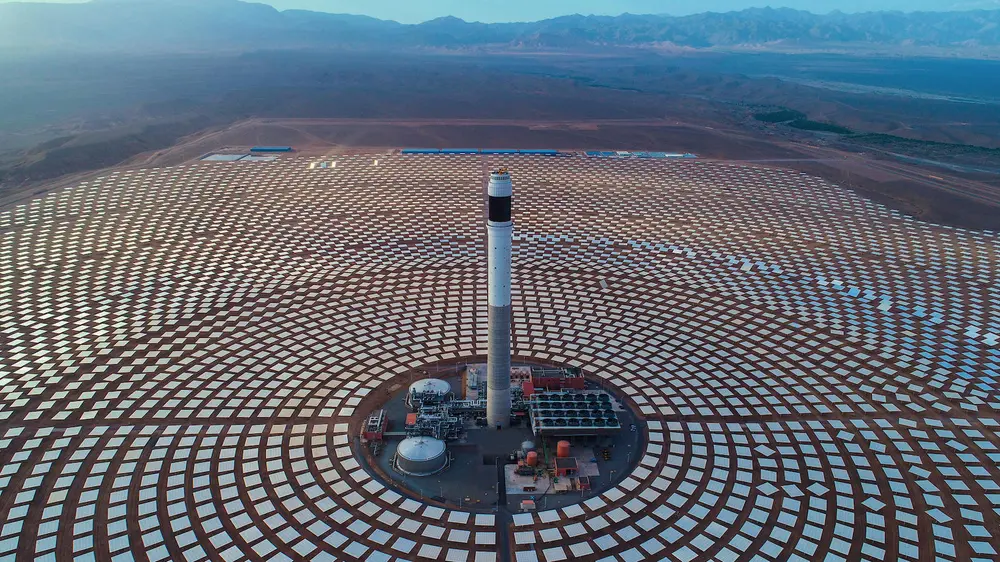
Economics drive this surge. In Nigeria, avoided diesel costs can repay solar panel investments within six months. Similar payback periods exist in other markets. Initial growth was concentrated in South Africa, where the grid crisis peaked in 2023, but the 2024-2025 surge occurred mostly outside the country, reflecting broader continental momentum. Yet imports do not equal deployment. Panels may languish in storage, be re-exported, or delayed by tariffs, meaning actual installed capacity typically lags by a year.
The electric vehicle frontier
Chinese electric vehicles (EVs) are also expanding, though from a smaller base. In the first nine months of 2025, African imports of Chinese EVs rose 184 per cent over 2024, exceeding one billion dollars in sales, according to Reuters. EVs still represent under 1 per cent of total car sales, though urbanisation, rising fuel costs, and emerging government incentives have created receptive conditions, particularly in cities such as Nairobi, Lagos, Johannesburg, and Cairo.
Manufacturers are expanding aggressively. BYD plans to nearly triple its South African dealership network by 2026. Chery is growing across Kenya and South Africa, targeting middle-class buyers with affordable models. Investments include local assembly plants, financing models, and after-sales networks. Morocco’s Jiangsu Yunyi Electric Company is investing 1.2 billion rand in a Tangier production facility for automotive electronics. Kenya’s ePureMotion is partnering with Dongfeng to begin EV assembly in 2026, and LUG West Africa plans 250 charging points in Lagos.

African governments see opportunity and risk. Morocco’s automotive sector employs over 222,000 workers and produced one million vehicles in 2025, aiming for 1.5 million in 2026. Kenya is emerging as a dynamic EV hub, with incentives, charging infrastructure, and integration into national energy strategy. Yet the dominance of Chinese imports raises concerns about supply chain vulnerability. As Chinese domestic markets reach saturation and subsidies decline, overflow could accelerate, raising questions about whether Africa gains industrial capacity or merely absorbs surplus.
Financing the transition
Technology adoption is advancing, but financing remains the fundamental constraint. Between 2020 and 2025, Africa secured roughly 34 billion dollars in clean power investments, half for solar. Africa’s share of global renewable investment remains below 2 per cent. The 2023 Nairobi Declaration set a target to scale renewable capacity from 56 gigawatts in 2022 to at least 300 gigawatts by 2030. COP30 in Brazil reaffirmed global ambitions to triple renewable energy capacity by 2030, with pledges of over 50 billion dollars for Africa, including off-grid solar and mini-grids.
Yet translating pledges into capital flows is uncertain. Climate finance to Africa remains fragmented, burdened by perceived political and financial risks, and slowed by inconsistent policy and permitting. Blended finance—combining public and commercial investment—shows promise but remains limited. NJ Ayuk of the African Energy Chamber notes that infrastructure limitations make large-scale decarbonisation harder in Africa. Grid deficits, outdated transmission lines, and energy shortfalls hinder renewable integration. Transitioning to a low-carbon economy demands substantial upfront investment that many countries struggle to secure.
Fossil fuel dependence complicates the picture. Oil and gas exports support fiscal stability. The 2026 Outlook estimates that by 2035, Africa could produce over 9 million tonnes of low-carbon hydrogen annually, leveraging solar and wind resources, land, and proximity to Europe. Major projects are concentrated in Namibia, South Africa, Mauritania, Egypt, and Morocco. Realising this potential requires regulatory frameworks, regional cooperation, and investment levels that remain elusive. Ibrahim Abdullahi, a climate policy analyst, cautions that Africa cannot deliver a just transition on unfair global terms. Trade and investment agreements limit local content rules and industrial policy, while finance is fragmented and insufficient. Without strong safeguards, green projects may replicate the social and environmental harms of fossil fuels.
Geopolitics and industrial strategy
China’s expanding role carries geopolitical weight. State-owned Power China is constructing utility-scale solar farms and bidding to upgrade South Africa’s 25-billion-dollar electrical grid modernisation programme. Deputy Energy Minister Samantha Graham-Maré told the New York Times that domestic funds are insufficient. By positioning themselves as essential partners, Chinese companies can deepen influence.
Africa also holds critical minerals. The Democratic Republic of Congo produces 70 per cent of global cobalt, Zimbabwe hosts large lithium deposits, and Gabon has manganese reserves. Processing minerals in-country preserves jobs, reduces emissions, and builds economic value. Nigerian firm Salpha Energy has installed solar systems for over two million homes since 2017, aiming for 300,000 units annually, including exports to Ghana.

Replicating China’s development trajectory—technology transfer, domestic capacity building, and eventual competition with foreign suppliers—remains uncertain. China relied on joint ventures two decades ago to transfer knowledge and create a domestic industry. African nations are attempting similar strategies, but execution is inconsistent.
Uneven progress across regions
Transition pace varies across regions. North African nations including Algeria and Egypt prioritise utility-scale solar for grid supply, reducing fossil fuel dependence. Sub-Saharan Africa emphasises distributed systems: rooftop panels and mini-grids serve off-grid communities, providing first reliable electricity access and enabling extended business hours, healthcare, education, and household income growth.
Battery storage, though nascent, is growing rapidly. Installed capacity increased tenfold by 2024, reflecting declining prices and recognition of storage’s importance for grid stability. Storage allows higher integration of intermittent renewables while reducing reliance on diesel and hydropower. Zambia’s addition of 60 megawatts of solar to offset hydropower shortfalls shows renewables’ role as a resilience tool.
Progress remains concentrated in South Africa, Egypt, Morocco, Kenya, and Nigeria. Elsewhere, fossil fuel dependence persists. Monitoring deployment is critical, warns Muhammad Mustafa Amjad of Renewables First. Without it, opportunities are lost and transition becomes disorderly.
2026: A potential inflection point
Analysts view 2026 as decisive. Tina Engelhard writing in Capital Business notes that slow, incremental progress has given way to a more dynamic phase. Falling costs, advancing technology, and emerging local manufacturing are accelerating solar capacity growth.
In February 2026, Intersolar Africa in Nairobi will convene global expertise and African innovation, highlighting photovoltaics, storage, grid integration, and digital solutions. The event will focus on unlocking capital, shaping policy, and forging partnerships that accelerate deployment. Nairobi’s role as a renewable hub mirrors broader continental trends, with similar dynamics in Johannesburg, Cairo, Lagos, and Accra.
Uncertainties persist. The United States has withdrawn from key climate frameworks, reducing diplomatic pressure for decarbonisation and potentially diminishing financial support for renewables in developing nations. Meanwhile, the AI and data centre boom is sustaining investment in renewable energy and batteries, raising questions about whether capital will flow to African markets or concentrate elsewhere.
The path not taken
Africa’s transition lacks the coordinated multilateral frameworks of previous decades. International negotiators pursue fossil fuel phase-out and deforestation elimination, but progress is slow. China’s upcoming five-year plan, setting carbon intensity targets, will be scrutinised for evidence of leadership amid global backtracking.
In this fragmented landscape, Africa navigates transition through bilateral ties, market forces, and domestic policy rather than comprehensive global cooperation. Low historical emissions provide moral authority to demand finance and technology transfer, but converting this into tangible flows remains difficult.
The risk is that speed becomes divorced from equity and sustainability. Rapid transition without attention to governance and social dynamics may fail politically and undermine climate goals. Success requires international partners to respect African leadership, priorities, and definitions of development, even when they challenge existing power dynamics.
Solar panels arriving at African ports, EVs on Nairobi streets, and charging infrastructure in Lagos are more than technological adoption. They represent a wager on self-sufficiency, a bid to leapfrog fossil fuel dependence, and a test of whether development and decarbonisation can advance under severe capital and infrastructure constraints.
Africa’s choices in 2026 will increasingly shape the continent’s energy future and the viability of global climate targets. The coming months will determine whether current momentum marks genuine transformation or a temporary surge in imports, and whether Africa can lay foundations for sustainable development or trade one dependency for another.


