

The global green shift is underway, but Africa risks being left behind
The race to dominate clean technologies is reshaping global trade and industrial policy. From Washington to Brussels to Beijing, governments are betting billions on green industries such as electric vehicles, hydrogen, solar, and critical minerals.
For much of Africa, the question is not whether to compete but how. The continent contributes less than 4 percent of global emissions yet bears a disproportionate share of climate impacts. It now faces a new risk of being locked into a peripheral role as a supplier of raw materials for the world’s clean energy future.
The industrial policy playbook is changing
Industrial policy has moved from taboo to mainstream. The United States’ Inflation Reduction Act, the European Union’s Green Deal Industrial Plan, and China’s long-standing state-led model all recognise that markets alone cannot deliver a rapid clean transition.
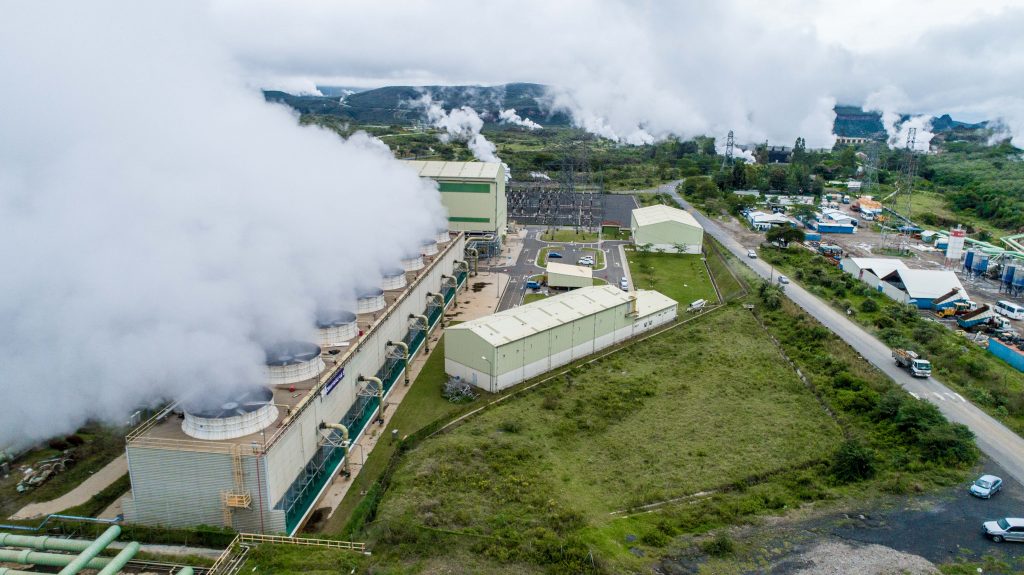
For Africa, this is both an opportunity and a test. Countries such as Kenya, Morocco, and South Africa are using green industrial strategies to attract renewable and manufacturing investment. Kenya’s energy mix is already 80 percent renewable, led by geothermal, hydro, and wind. Yet without coordinated fiscal incentives, much of the resulting value could still be captured by foreign investors.
Fiscal incentives must reward innovation, not dependence
Many African governments offer tax holidays and duty exemptions to attract clean-tech investors. The outcomes vary widely. Morocco’s solar sector has benefited from consistent industrial planning, while in other markets, loosely designed incentives have encouraged projects that import technology and export profits.
As economist Carlos Lopes observes, “industrial policy only works when it builds domestic capability.” In Africa, that means linking incentives to local research, workforce training, and regional content targets. Kenya’s Climate Change (Amendment) Act of 2023 begins to address this by integrating carbon markets and green finance, though fiscal regimes still favour extractive industries over regenerative ones.
A fair transition requires regulatory clarity and market neutrality
Attracting capital is only part of the challenge. Investors also need transparent and predictable rules. Carbon pricing remains limited across the continent, and global voluntary markets are often dominated by Northern intermediaries. Without clear valuation and benefit-sharing mechanisms, African countries risk losing both integrity and income.
Power sector regulation presents a similar issue. Kenya’s KenGen has demonstrated leadership in geothermal innovation, but grid constraints and opaque pricing discourage private participation. Transparent market access and predictable tariffs would attract more investment than tax incentives alone.
The supply chain question goes beyond extraction
Critical minerals such as lithium, cobalt, and rare earth elements form the foundation of clean energy technologies. Africa holds around 30 percent of global reserves, yet most are exported raw. The Democratic Republic of Congo produces 70 percent of the world’s cobalt but captures less than 3 percent of its value.
To change this, countries must act regionally. The African Continental Free Trade Area can integrate energy and manufacturing value chains across borders. A regional battery corridor linking DRC, Zambia, Tanzania, and Kenya could move the continent higher in the value chain while reducing dependency on imported technologies.
Financing the transition remains the biggest constraint
Africa’s clean energy ambitions will not materialise without affordable finance. The cost of capital for renewable projects in sub-Saharan Africa is up to five times higher than in Europe. Despite pledges made under the Paris Agreement, most climate finance still flows to middle-income economies such as India and Brazil.
Perceptions of risk remain a major barrier. Innovative instruments like blended finance, debt-for-climate swaps, and regional green bonds can help reduce borrowing costs. Kenya’s oversubscribed sovereign green bond, issued at 9.8 percent, illustrates investor appetite when frameworks are credible. Yet without reforming global credit rating systems and concessional finance rules, Africa will remain marginalised in the global green economy.
Diplomacy and agency matter as much as capital
Africa’s bargaining power depends on coordination. At COP29 in Baku, African negotiators will need a unified stance linking industrial policy, trade, and finance. Instead of competing for donor-backed projects, governments can jointly set standards for carbon accounting, mineral traceability, and technology transfer that reflect regional realities.
The African Union’s Climate and Resilient Development Strategy (2022–2032) provides a starting point. Its success will depend on aligning national ambitions with collective execution. As WTO Director-General Ngozi Okonjo-Iweala has said, “Africa cannot be the workshop of others’ green transitions. It must design its own.”
The leadership imperative
For business leaders, Africa’s green transition is now a competitiveness issue, not a social one. Companies that integrate sustainability into core strategy, invest in local partnerships, and engage with evolving policy frameworks will gain early advantage. Those that view it only as corporate responsibility will fall behind.
The industrial revolution of this century will be green, but it must also be fair. The question is whether African leaders, public and private, can shape it rather than merely supply it.
References
- International Energy Agency, Africa Energy Outlook 2024
- World Bank, Scaling Up to Phase Down: Financing Energy Transitions in Africa
- UNECA, Africa Industrialization Report 2023
- African Development Bank, Green Growth and Climate Resilience Strategy
By Bramwell Mwangi, for Ethical Business Africa


