
Buried under mountains of Western clothing waste, local enterprises are carving out a different future from discarded flip-flops and textile scraps
By Muturi Githae
Drive east from Nairobi’s city centre, past the sprawling informal settlements, and you will hit the infamous Dandora dumpsite. Here, clothing mountains dwarf the surrounding shanties – endless peaks of discarded garments that tell the story of global fashion’s hidden costs. This isn’t just Kenya’s problem. It’s where the world’s unwanted wardrobe ends up.
The numbers tell a brutal story. Every year, Britain alone ships over 36 million pieces of used clothing to Kenya. Research by the Changing Markets Foundation reveals that up to a third contains plastic and arrives in such poor condition it goes straight to the dump or gets burnt. Much of what was once considered charitable donation has become, in effect, waste colonialism.
Yet something unexpected is happening in this landscape of discarded dreams. Across Kenya, from Nairobi workshops to coastal beaches, entrepreneurs are refusing to accept that waste equals worthlessness.
Art from the tide line
Julie Church was walking along Kiwayu Island’s pristine beaches in 2005 when the sheer volume of washed-up flip-flops struck her. Not one or two, thousands upon thousands, their bright colours jarring against white sand and turquoise water. Rather than despair, she saw possibility.
Ocean Sole, the organisation Church founded, now employs 90 Kenyans who transform those discarded flip-flops into sculptures that sell worldwide. The process sounds simple, collect, clean, carve, but watch the artisans work and you realise you’re witnessing genuine alchemy.
“Every morning, our collectors walk the beaches,” explains Moses Wanjala, who’s been with Ocean Sole for eight years.
“What tourists see as pollution, we see as tomorrow’s rhinoceros or giraffe.”
The workshop in Nairobi hums with activity. Flip-flops get sorted by colour, washed, then glued together into dense, marbled blocks. Artisans carve these blocks with simple tools – sandpaper, carpentry knives, endless patience. A discarded sandal becomes an elephant. Beach litter transforms into a lion’s mane.

But Ocean Sole’s real achievement is not artistic – it is economic. They have created jobs from junk, turned pollution into paycheques. Weekly beach cleanups remove tonnes of waste while providing raw materials. It’s a circular economy born from necessity, refined through innovation.
Heritage brands embrace change
Not all sustainable fashion in Kenya starts with waste collection. Some of the country’s most established names are retrofitting their operations around principles their founders might not have initially imagined.
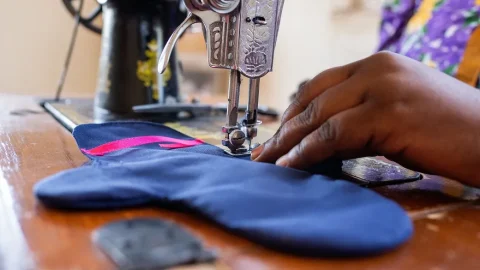
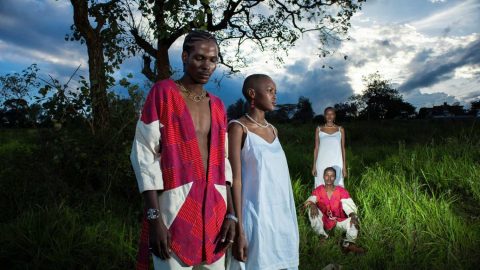
Take KikoRomeo. When Scottish designer Ann McCreath launched the brand in 1996 after fashion studies in Rome and work experience in Barcelona, sustainability was not the buzzword it is today. Yet McCreath’s approach – working with local artisans, using available materials, creating lasting pieces – anticipated many current conversations about ethical fashion.

Today, KikoRomeo uses 100% cotton industrial waste for many garments. Each piece gets hand-painted by Sudanese artist Eltayeb Dawelbait, creating unique items that can not be mass-produced or easily discarded. Their sustainability approach extends beyond materials to community impact.
During Kenya’s 2008 post-election violence, McCreath launched Peace Patches – a project bringing together young women from different ethnic groups to create embroidered pieces together. When COVID-19 hit in 2020, the Moving Masks initiative provided income for unemployed women, giving them fabric scraps to embroider with whatever threads and materials they had available.
“We’ve never seen sustainability as separate from social responsibility,” McCreath reflects.
“In Kenya, they’re the same conversation.”
The waste trade’s hidden costs
Understanding why these initiatives matter requires grasping the scale of Kenya’s textile import crisis. The country has become a dumping ground for wealthy nations’ fashion mistakes. What arrives as “donated clothing” often can’t be worn, sold, or even recycled effectively.
The Stockholm Environment Institute recently convened workshops in Nairobi focused on zero-waste fashion strategies. Participants grappled with a uncomfortable reality: individual innovation, however impressive, can’t solve problems created by global systems of overproduction and disposal.
Kenya implemented a plastic bag ban in 2017, forcing adaptations across industries. But textiles present more complex challenges. Unlike single-use plastics, clothing contains multiple materials, dyes, and finishes that complicate recycling efforts.

Beyond individual success stories
Ocean Sole and KikoRomeo represent different approaches to the same fundamental challenge: how do you create value from what others consider valueless? Their success demonstrates that circular economy principles work in practice, not just theory.
But their stories also highlight limitations. Ocean Sole processes thousands of flip-flops monthly, yet millions more wash up on East African shores. KikoRomeo employs dozens of artisans, but Kenya’s youth unemployment affects hundreds of thousands.

The mathematics of waste generation versus waste processing do not yet balance. Western consumers discard clothing faster than East African innovators can transform it. Until that equation changes, places like Dandora will continue growing.
Models for elsewhere
Still, Kenya’s waste entrepreneurs offer templates that other countries facing similar challenges might adapt. The combination of environmental necessity, available labor, and creative problem-solving that drives these initiatives exists across the Global South.
What started as beach cleanup has evolved into passionate activism at Ocean Sole. Fashion heritage has transformed into sustainability leadership at KikoRomeo. Both demonstrate that solutions often emerge from unexpected places, developed by people who refuse to accept that problems are permanent.
The flip-flop sculptures selling in European galleries carry stories of Kenyan beaches restored. The hand-painted garments worn in New York tell tales of women finding income during crises. These aren’t just products – they’re proof that waste doesn’t have to mean worthlessness.

The bigger picture
Walking through Dandora’s textile mountains remains sobering. The scale of waste seems to mock individual efforts at transformation. Yet across Nairobi, in workshops and studios, on beaches and in markets, entrepreneurs continue proving that another way is possible.
They’re not waiting for permission from global fashion houses or policy changes from distant governments. They are creating solutions with whatever materials they can gather, whatever skills they can develop, whatever markets they can reach.
Whether their innovations can scale to match the problem remains uncertain. What is already clear is that they’ve transformed how we might think about waste, work, and worth. In a world choking on its own consumption, that transformation matters more than we might realise.
Reporting supported by additional research in Nairobi
Read the Story + See the Process
From discarded plastic to runway-ready pieces – witness the transformation that’s reshaping fashion in Nairobi
🎬 Watch the Behind-the-Scenes
See how beach litter becomes wearable art in our exclusive Instagram Reel. Follow artisans as they transform flip-flops into sculptures and plastic bottles into fashion statements.
📖 Dive Deeper
This story is part of our ongoing coverage of Africa’s circular economy innovations. Explore how young entrepreneurs across the continent are turning waste into opportunity.
Take Action
🛍️ Shop with Purpose
- Visit Ocean Sole to purchase flip-flop sculptures that fund beach cleanups
- Browse KikoRomeo’s sustainable collection featuring upcycled materials
- Support other Kenyan sustainable fashion brands making a difference
📍 Visit in Person
Planning a trip to Nairobi? Book a workshop tour at Ocean Sole to see artisans creating flip-flop artwork firsthand.
💬 Join the Conversation
Share your thoughts: How can consumers in wealthy nations reduce textile waste exports? What role should fashion brands play in addressing disposal costs?
📧 Stay Informed
Read more of our stories about East African innovation, environmental solutions, and the people transforming waste into wonder.
🔗 Share This Story
Help amplify the voices of Kenya’s sustainable fashion pioneers:
- Twitter/X: “From Nairobi’s beaches to global runways – see how flip-flops become art and plastic becomes fashion #CircularFashion #MadeInNairobi”
- LinkedIn: “Powerful story about Kenyan entrepreneurs turning textile waste into economic opportunity. A model for sustainable development worldwide.”
- Instagram: Tag @oceansole @kikoromeo to show your support for sustainable fashion innovation
📱 Follow Our Coverage
- #CircularFashion for sustainable fashion stories worldwide
- #MadeInNairobi for more Kenyan innovation features
- #YouthInnovation for young entrepreneurs changing the world
Related UN SDGs: SDG 8 (Decent Work), SDG 9 (Innovation), SDG 12 (Responsible Consumption)